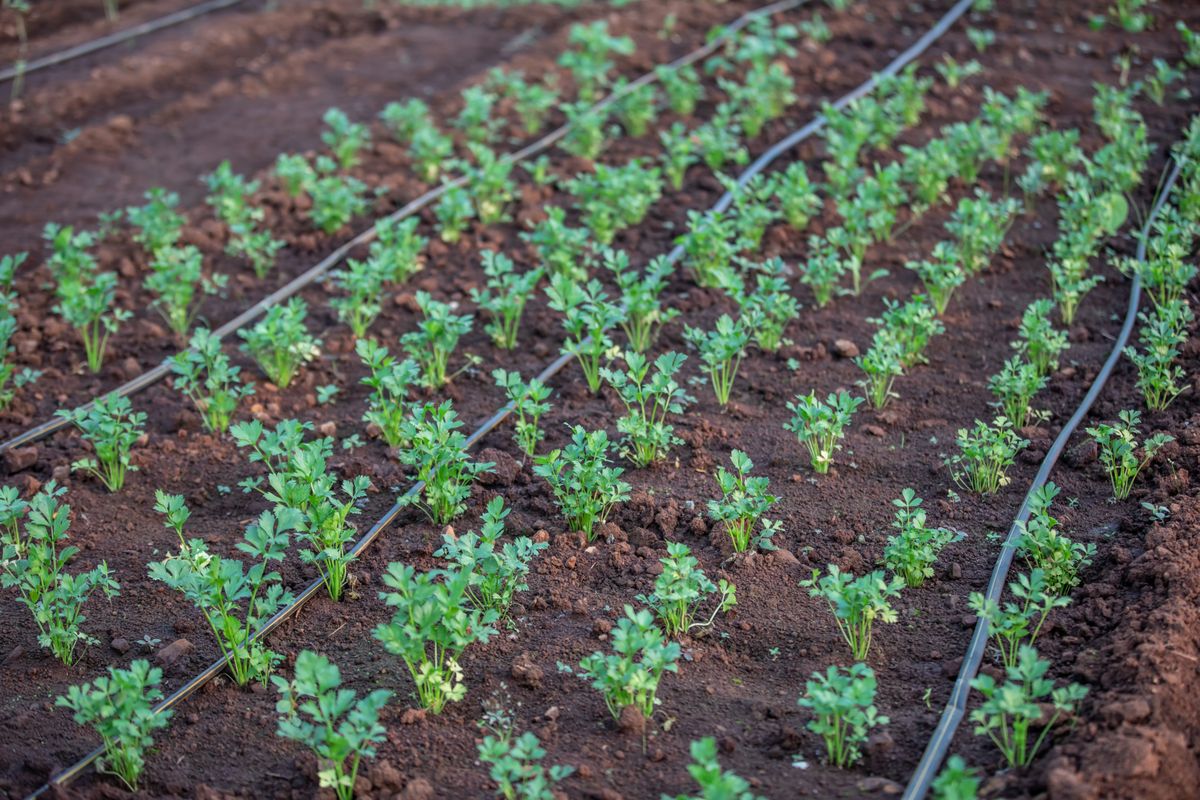
Overhead sprinklers lose up to half their water to wind and evaporation before a drop reaches a root. Drip irrigation puts water exactly where plants drink — at the soil, drop by drop. Here's how the system works, what it costs, and why our nursery runs on nothing else.
Why drip beats spray for beds
A drip emitter delivers a gallon per hour straight to the root zone. Leaves stay dry, which means less powdery mildew and blackspot. Weeds between plants stay thirsty while your plants drink. In our trial rows, drip-grown tomatoes out-yielded spray-grown ones by a third on half the water.
The parts, in plain language
- Filter and pressure regulator — drip lines clog without them; this $30 pair saves the whole system.
- Half-inch mainline with quarter-inch branches snaking to each plant.
- Emitters matched to the plant — one gallon per hour for perennials, two for shrubs and roses.
- A timer — even a simple battery one — running deep, infrequent soaks twice a week.
Water deep, not daily
Daily sprinkles grow shallow roots that panic in heat. Drip lets you soak six inches deep twice a week instead, training roots downward. Mulch over the lines hides them, stops evaporation and keeps the whole bed looking tidy.
"The best irrigation is the kind you forget exists — plants just look better, and the water bill quietly drops." — Priya Nair, Nursery & Tree Farm lead
What does it cost?
A DIY starter kit for three raised beds runs under $80. A professionally zoned drip system for a full backyard, installed with a smart controller, typically lands between $900 and $2,400 — and most households recover it in water savings within three summers.
We install these weekly
Our irrigation and drainage service designs, installs and winterizes drip and sprinkler systems across Springfield. Book a free coverage audit and we'll show you exactly where your current water goes.